 Molela
Mohit Kumhar
Molela Art Terracotta Murals
Rajasthan
Mohit Kumhar is the 16th Generation carrying the legacy of the Molela Art in Rajasthan
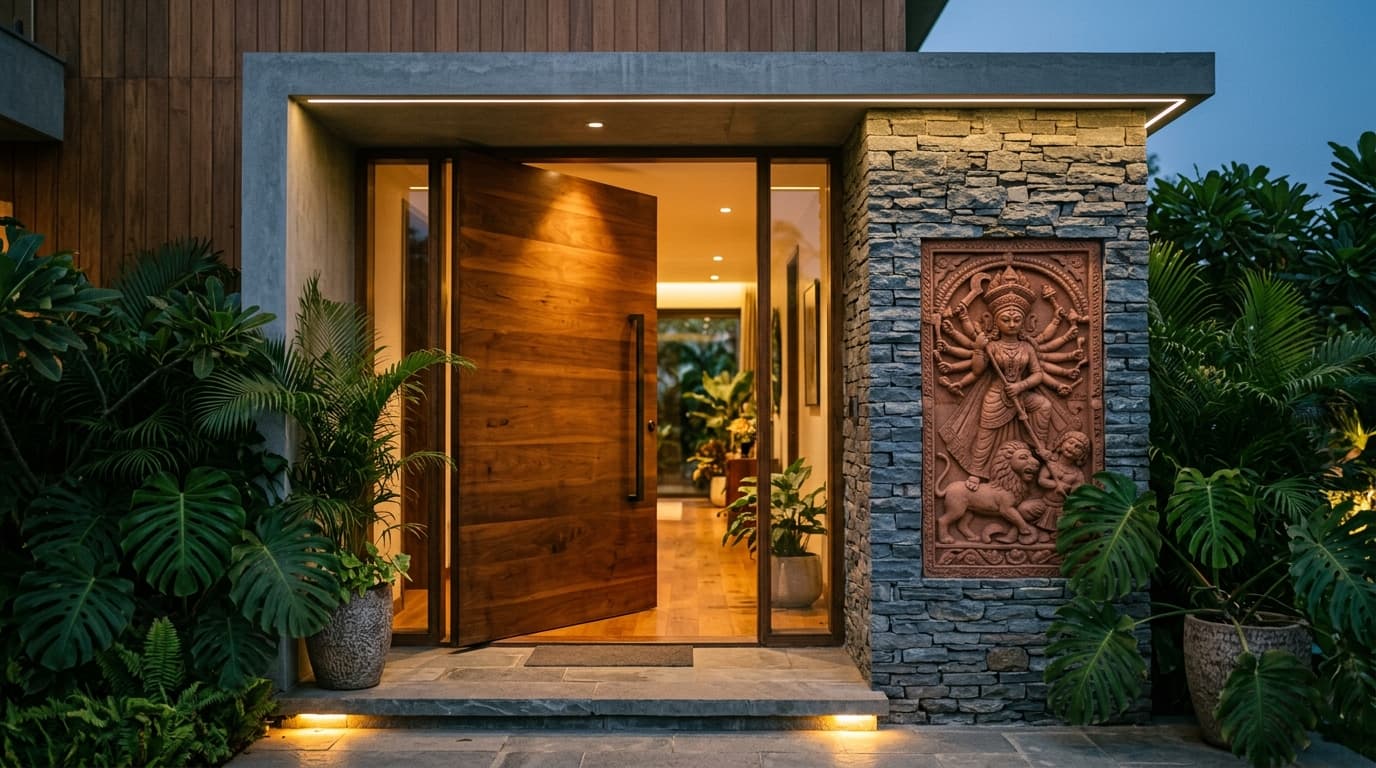
The People
Bengal carries one of the world’s oldest unbroken craft traditions. From the terracotta temples of Bishnupur to the painted scrolls of Pingla, these traditions are not museum artefacts — they are living practices, sustained by communities whose knowledge passes hand to hand, generation to generation.
Karigori works directly with master artisans across six craft disciplines, commissioning new works, connecting them with architects and interior designers, and ensuring that every sale flows back to the maker at fair value.
Each artisan profile tells a complete story — their tradition, their village, their method. When you commission a Karigori piece, you know exactly whose hands made it.
MolelaMolela Art Terracotta Murals
Rajasthan
Mohit Kumhar is the 16th Generation carrying the legacy of the Molela Art in Rajasthan
 Terracotta
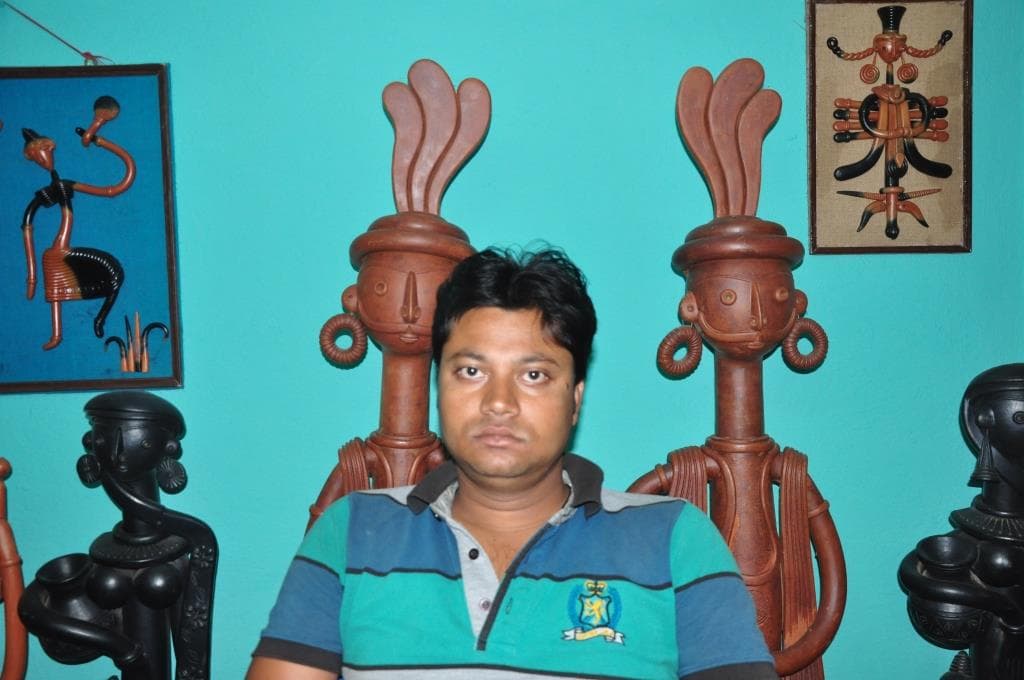
Terracotta
Panchmura, Bankura, West Bengal
Jagannath Kumbhakar is a third-generation terracotta artisan from Panchmura, Bankura, with over 30 years of experience in the craft. Trained by his grandfather, Madanmohan Kumbhakar, he carries forward the rich terracotta traditions of Panchmura. A State Award recipient, Jagannath has showcased his work across India and internationally, including in France. His expertise spans wall hangings, frames, dolls, figurines, and handcrafted décor.
 Madhubani
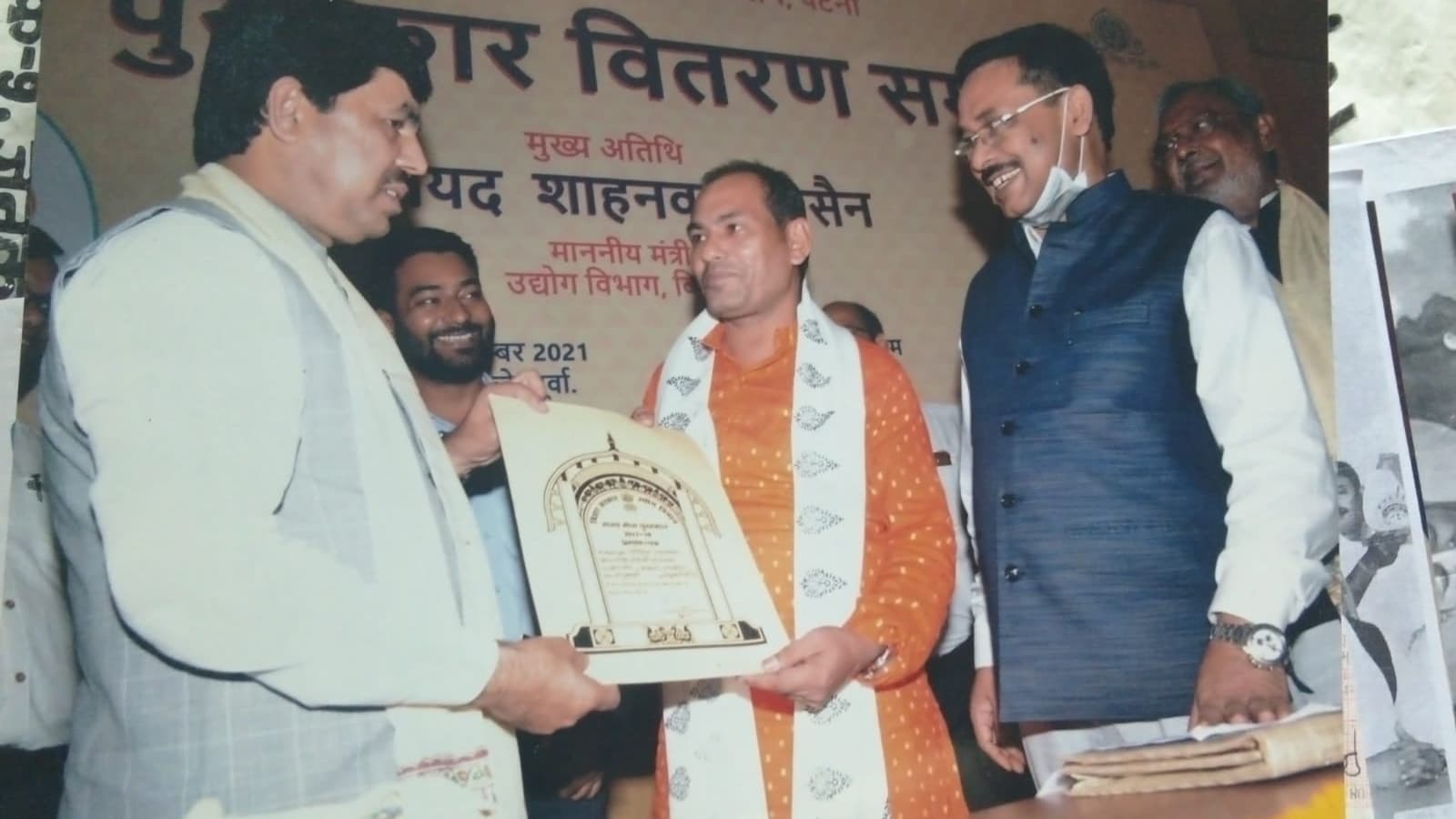
Madhubani Painting
Madhuban, Madhuban, Bihar
Parikshan Paswan is an Indian folk artist specializing in traditional Mithila (Madhubani) painting from Bihar. Coming from the Paswan artisan community—a collective that has historically transformed the landscape of Madhubani art through distinct narrative forms like Godna (tattoo motif traditions) and nature-centric iconography—his work reflects the enduring living heritage of regional Indian folk expression.Artistic Practice & StyleLine Work and Detailing: Rooted in classic Mithila aesthetics, his visual vocabulary utilizes precise, continuous line drawing, repetitive geometric framing, and dense symbolic patterning.Thematic Scope: His art encompasses folkloric narratives, natural motifs (flora, fauna, and local wildlife), and cultural rituals native to the Mithila region.Medium & Process: True to generational practice, his work relies on handmade paper or handloom fabric bases, created with fine brushes and nibs using lampblack ink and traditional pigment tones.
 Terracotta
Terracotta
Panchmura, Panchmura, West Bengal
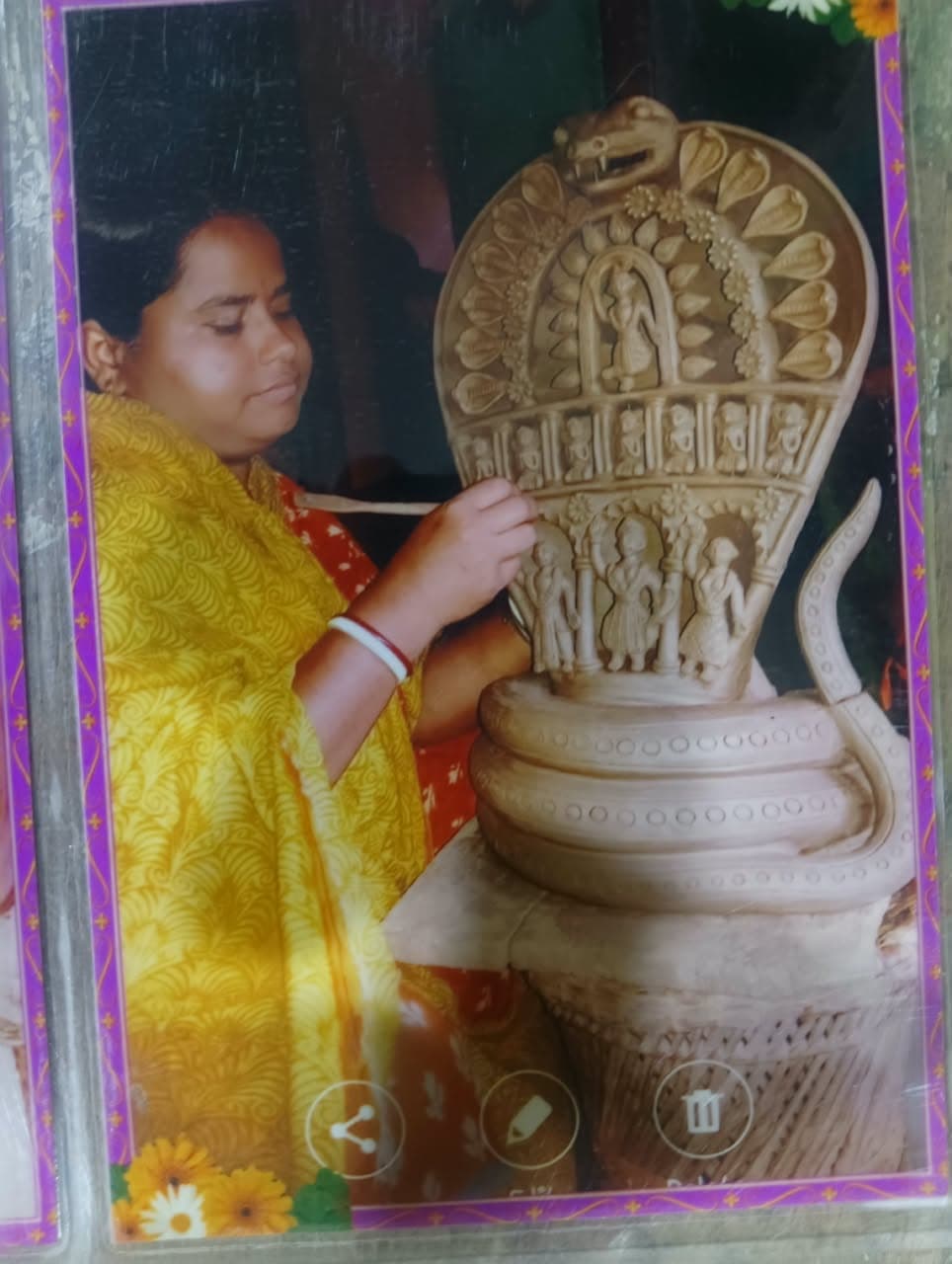
Urmila Kumbhakar is an accomplished traditional terracotta artist hailing from Panchmura village, located in the Bankura district of West Bengal, India. She belongs to the indigenous Kumbhakar community—the traditional potter caste—which has preserved the legacy of the world-famous, GI-tagged Bankura Terracotta Craft for generations. Through her lifelong dedication to clay, she has emerged as a prominent voice for rural women artisans and a vital custodian of Bengal's cultural heritage.Born into a family-based lineage of craftspeople, Urmila’s artistic journey began early in life, learning the art of clay manipulation as part of a shared household tradition. In the artisan village of Panchmura, pottery is a highly collaborative family process deeply rooted in a gender-defined division of labor. While the men traditionally operate the heavy potter’s wheel to shape structural blocks, the women serve as the creative backbone of the craft. Urmila mastered the demanding tasks of detailed hand-modeling, fine assembly, sun-drying management, and aesthetic surface enhancements that give the local terracotta its distinct identity.Within the regional craft hubs of West Bengal, Urmila Kumbhakar is explicitly recognized for her exceptional expertise in terracotta painting and surface decoration. Her primary artistic contributions revolve around adding the delicate, final aesthetic touches to iconic Bankura structures, such as the legendary, erect-eared Panchmura Terracotta Horse and long-necked ritualistic elephants. Beyond these grand figures, she decorates clay panels, ritual plates (chali), and auspicious pots (ghats) with intricate geometric patterns, regional flora, and depictions of religious folklore scenes. Her work relies strictly on manual, heritage techniques: processing organic alluvial soil and river sand with fresh pond water, smoothing surfaces with custom bamboo tools, and firing the final pieces in traditional local kilns.While a vast majority of rural women artisans in regional handicraft clusters remain anonymous, Urmila's skill has earned her significant media recognition and cultural prominence. She was featured on regional television (Sun Bangla's Lakh Takar Lokhi Labh) as a nominated master craftswoman, where she proudly demonstrated the living clay legacy of Panchmura to a broader audience. Through her continuous hard work and leadership, Urmila Kumbhakar not only keeps an ancient art form alive amid modern socio-economic challenges but also ensures its future by actively passing down the nuanced painting and clay traditions of Bengal terracotta to the younger generations in her community.
 Terracotta
Terracotta
Panchmura, Panchmura, West Bengal
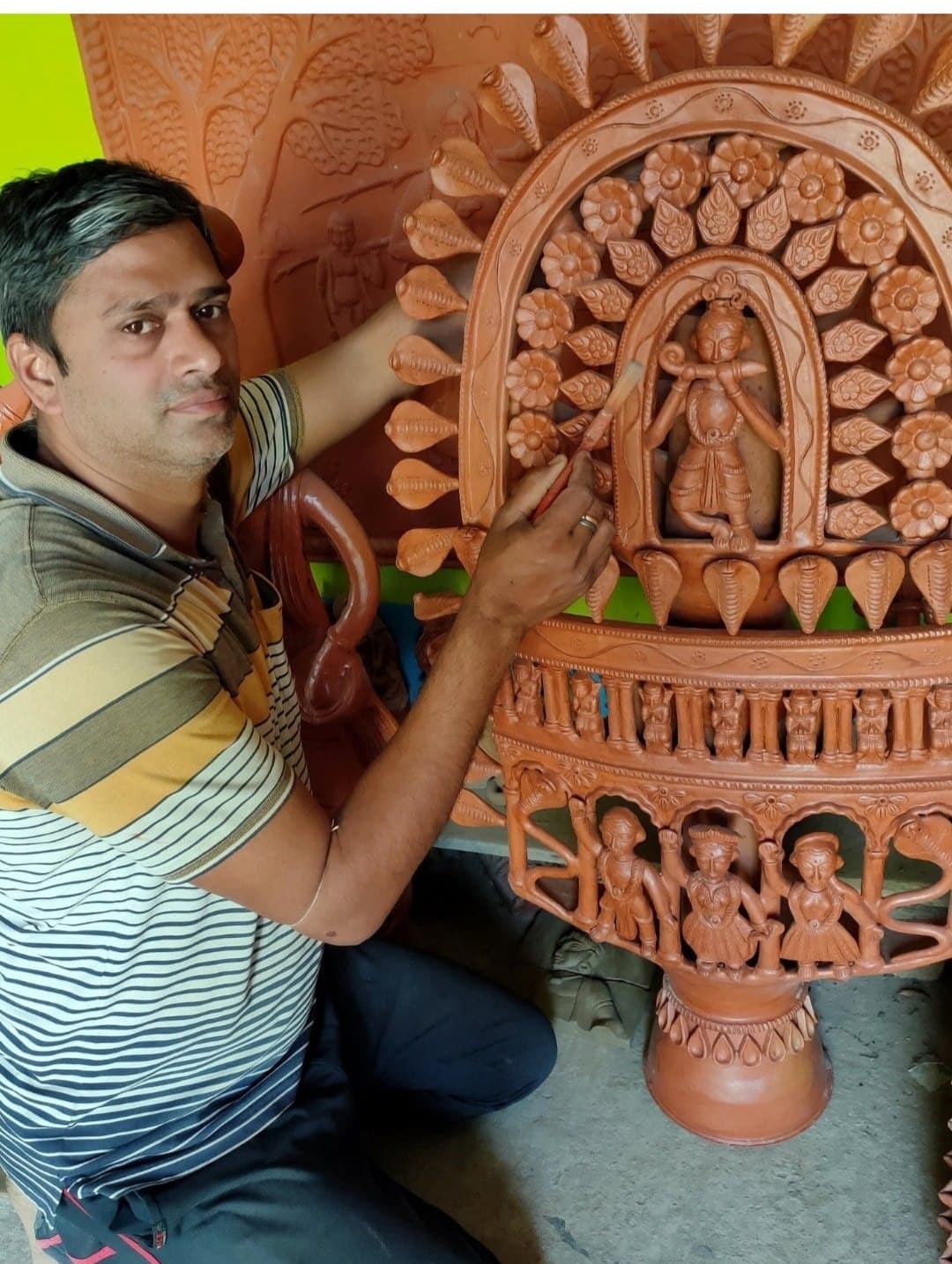
Bhutnath Kumbhakar is a celebrated traditional terracotta artist and State Awardee based in Panchmura village, within the Bankura district of West Bengal, India. He belongs to a legendary lineage within the indigenous Kumbhakar community—the heritage potter caste responsible for creating the world-renowned, GI-tagged Bankura Terracotta Craft. As a master craftsman, Bhutnath has dedicated his life to evolving the traditional forms of burnt-clay art, distinguishing himself as a prominent specialist in architectural installations and structural design.Born directly into the epicenter of Bengal's clay heritage, Bhutnath's artistic roots run incredibly deep. He is the great-grandson of the historic master craftsman Rash Behari Kumbhakar, the iconic artisan who received the National Award in 1969 for designing the elegant, erect-eared version of the Bankura Horse that later became the official crest-motif of the All India Handicrafts Board. Surrounded by this profound artistic environment, Bhutnath began dabbling with clay as a young lad of 10 or 12 under the watchful eyes of his father and uncles. Preferring the tactile freedom of the potter's workshop over formal academic studies, he spent his youth experimenting with shapes and forms, quickly mastering the intricate techniques of manual throw-work and structural component assembly.Within the contemporary terracotta landscape, Bhutnath Kumbhakar is highly revered for his specialized expertise in terracotta mural tiles and architectural wall hangings. While he maintains a firm grasp on building traditional figures like ritual elephants and folk dolls, his workshop has adapted significantly to modern spatial design. He relies strictly on the time-tested manual methodology of Panchmura: processing local alluvial soil mixed with precise ratios of sand, shaping components by hand or wheel, sun-drying the pieces, and firing them in local kilns to achieve their signature deep-red hue. His sophisticated relief work has made him a heavily sought-after artisan for crafting complex wall murals for government and corporate spaces, particularly in urban centers like Kolkata.Bhutnath’s contribution to preserving and propagating Indian handicrafts has been recognized through numerous prestigious accolades. Early in his career, his potential was marked by a prestigious scholarship from the Centre for Cultural Resources and Training (CCRT) in 1992. He later went on to win the State Award for Terracotta Art from the Government of West Bengal. Today, he operates an active terracotta workshop in Panchmura and frequently travels across India to participate in national exhibitions and conduct educational workshops, keeping the vital flame of Bengal’s living clay legacy burning for generations to come.
Direct collaboration
Every Karigori commission puts you in direct dialogue with the artisan — sharing spatial drawings, material samples and design sketches until the piece is exactly right. We facilitate the entire process from brief to installation.