Bishnupur: The Temple Town That Shaped Indian Terracotta
The Malla kings of Bishnupur built their temples in terracotta when stone was scarce. Eight centuries later, those panels remain the most sophisticated example of narrative relief work in Bengal.
The Necessity of Invention
In the 16th and 17th centuries, the Malla kings of Bishnupur wanted to build grand monuments to their devotion. There was only one problem: the alluvial plains of Bengal lacked the sandstone and marble used by temple builders in the rest of India. Forced to look downwards, they turned to the most abundant resource available—the riverbed clay.
What began as a compromise of geography resulted in one of the most extraordinary architectural movements in South Asia. The Malla kings commissioned local potters to translate the grandeur of stone carving into baked earth, elevating village craft to royal architecture.
The Narrative Facades
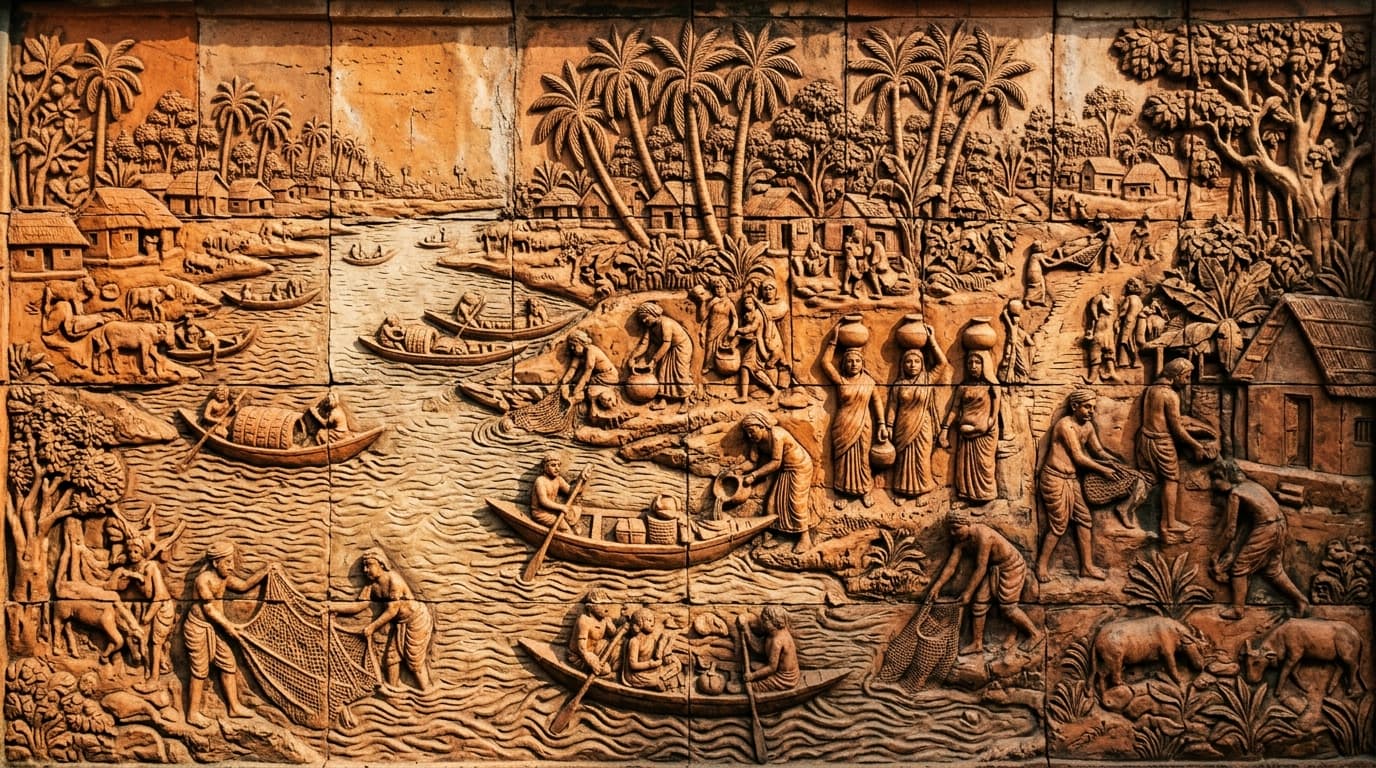
The temples of Bishnupur—such as the Shyam Rai, Jor Bangla, and Madan Mohan—are essentially open-air picture books. Their facades are entirely clad in thousands of intricately carved terracotta tiles.
Unlike the grand, abstract geometric patterns of Islamic architecture or the imposing, monolithic statues of southern Indian temples, Bishnupur's panels are deeply narrative and intimate. The bottom friezes typically depict scenes of contemporary life: Portuguese merchants in ships, royal hunting processions, and musicians. As the eye moves upward, the narrative shifts to the divine, detailing the epic battles of the Mahabharata and the pastoral romance of Krishna.
A Legacy Etched in Clay
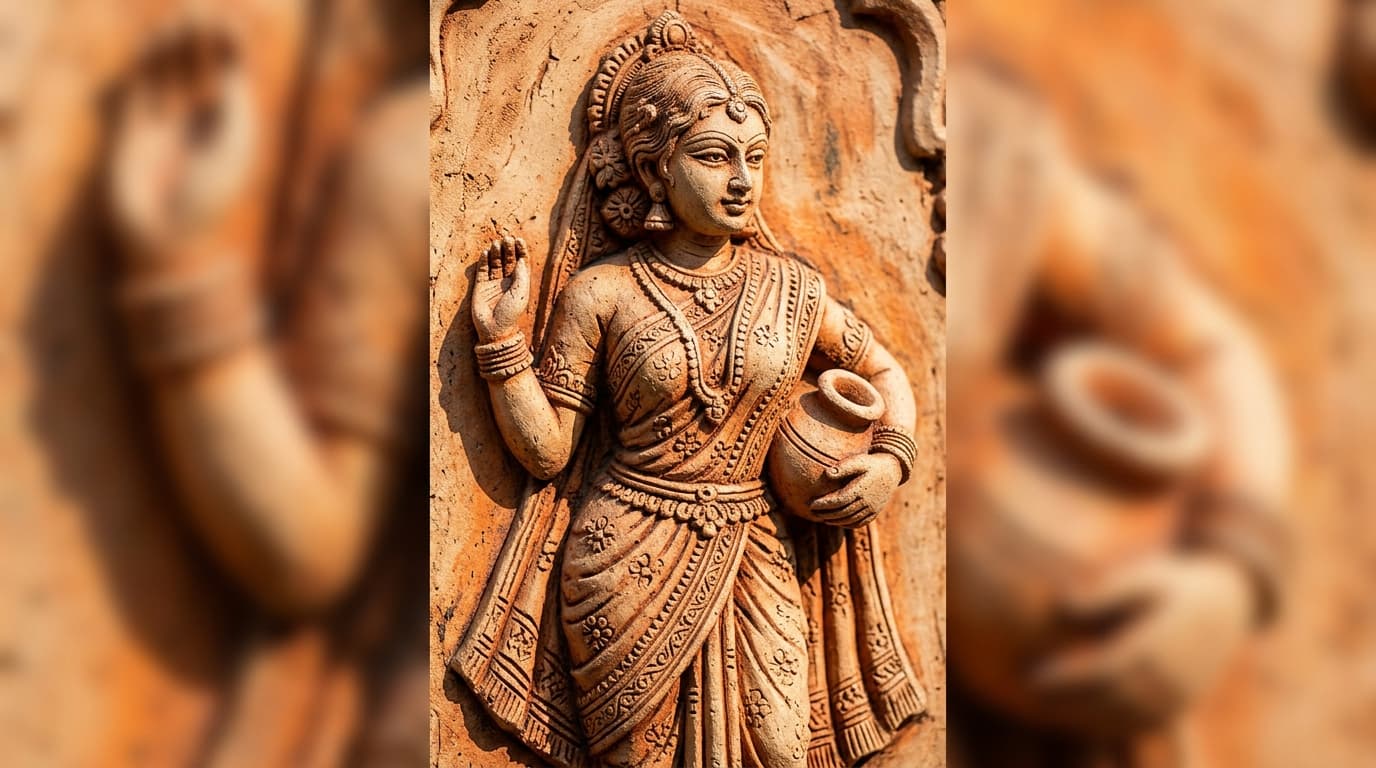
The genius of the Bishnupur artisans lay in their understanding of light. The terracotta tiles were carved with deep undercuts, ensuring that the harsh Indian sun would cast sharp, dramatic shadows, making the figures pop from the wall.
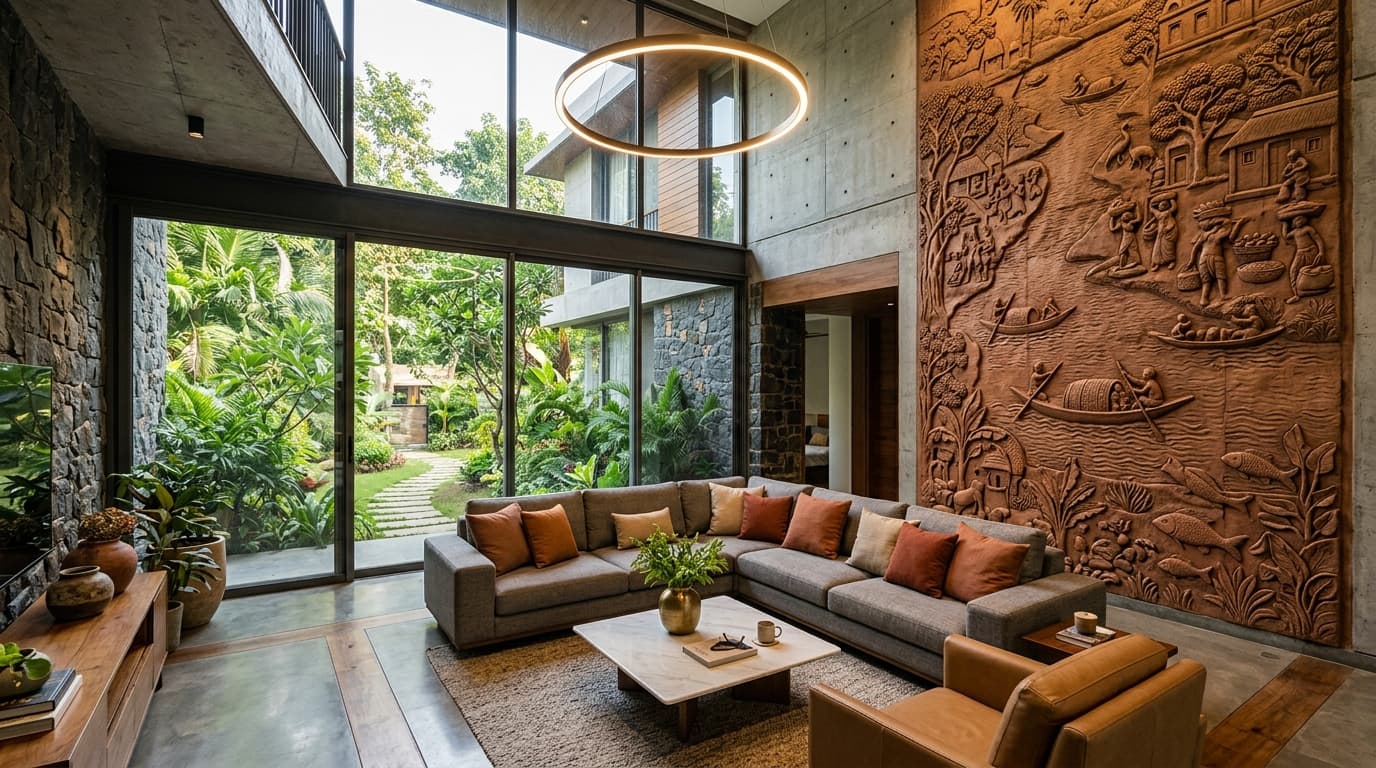
Today, these temples serve as the ultimate reference library for Karigori's artisans. When we design a modern mural, we are not inventing a new language; we are quoting the visual poetry written on the walls of Bishnupur four hundred years ago. It is a legacy that proves that with enough imagination, mud can be as monumental as marble.