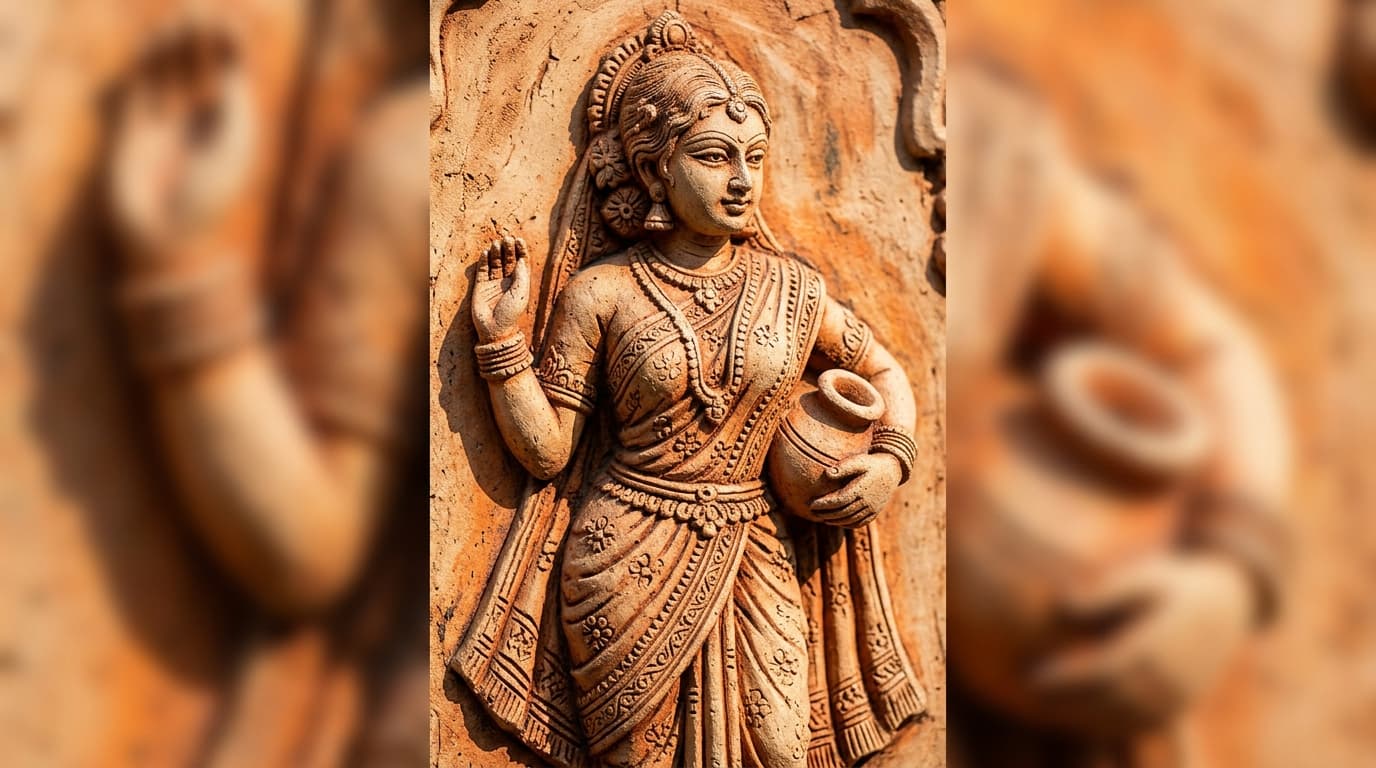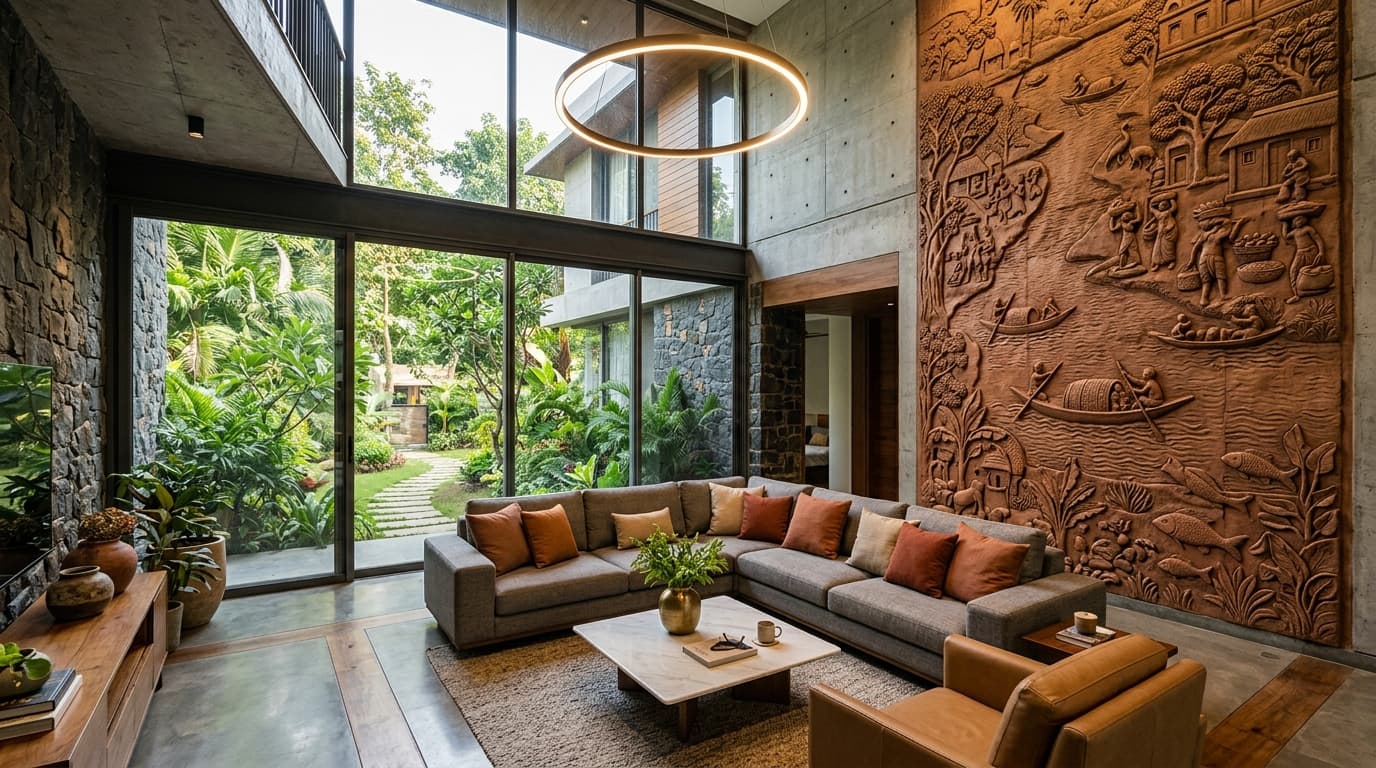
The Language of Terracotta in Bankura
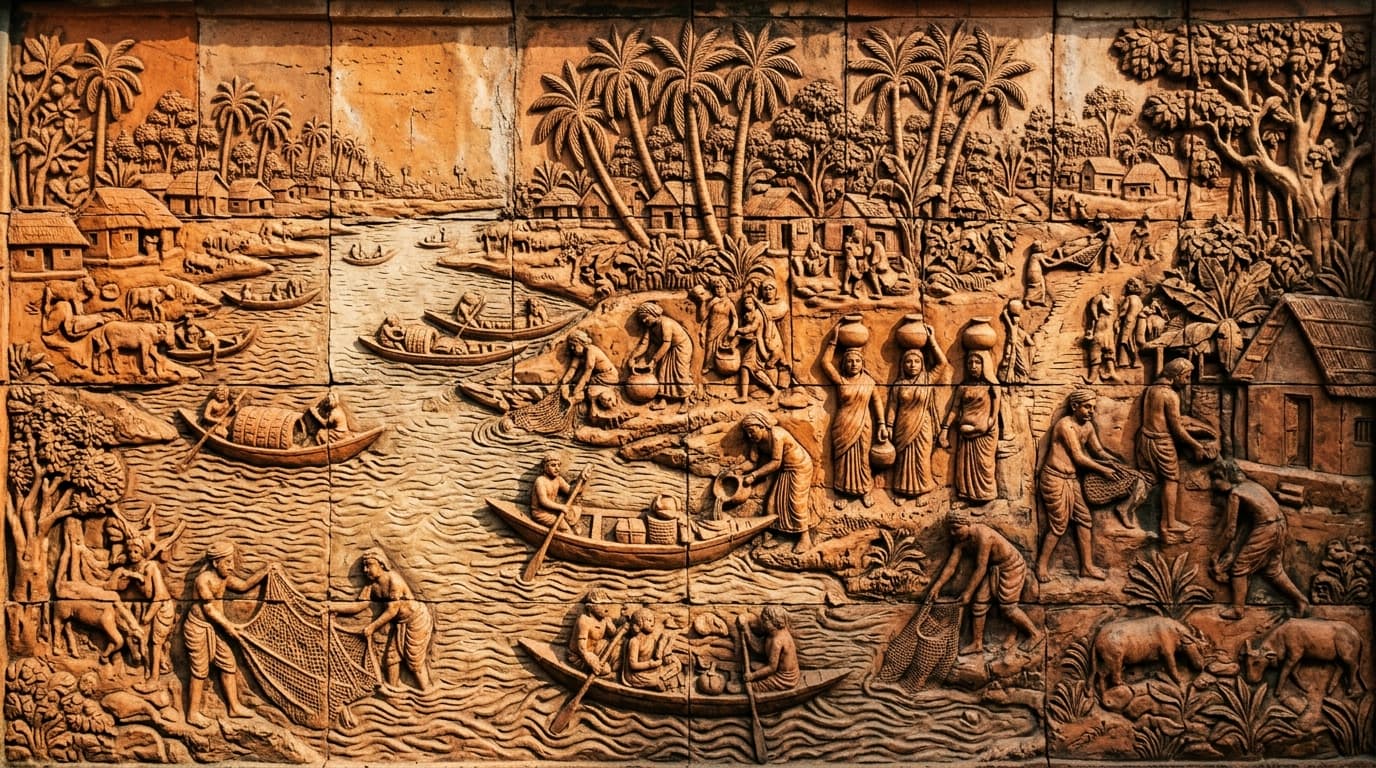
For centuries, the potters of Bankura have translated myth, season and memory into fired clay. We trace the visual grammar of a tradition that never stopped speaking.
The Clay of Memory
Deep in the heart of rural Bengal lies Bankura, a district where the earth itself is imbued with an artistic soul. The laterite soil, rich in iron, gives the region its distinct russet hue. It is this very earth that the local potters, the Kumbhakars, have coaxed into forms of staggering beauty for over three hundred years.
Unlike the classical stone sculptures of other Indian regions, Bankura terracotta was born from the soil of the everyday. It is a democratic art form, accessible, tactile, and deeply intertwined with the agrarian lifestyle. The visual grammar here is not dictated by rigid canonical texts but by the rhythms of rural life, local folklore, and the devotion of the ordinary villager.
A Vocabulary of Motifs
To read a Bankura terracotta panel is to read the landscape of Bengali myth. The artists employ a specific vocabulary: the wide-eyed *makara* (a mythical water beast), the galloping horses of Dharmathakur (the local deity), and intricate floral borders that mimic the creepers climbing the mud walls of village homes.
Each motif carries weight. The famous Bankura Horse, with its exaggeratedly erect neck and pointed ears, is not merely decorative. It was originally an offering to the village gods, a symbol of devotion from those who could not afford to sacrifice real animals. Today, it stands as the official crest of Indian handicrafts, a testament to the enduring power of rural design.
Firing the Earth
The creation process is as ancient as the art itself. The clay is harvested after the monsoons, mixed with sand and rice husk, and kneaded to the perfect consistency. The artisans then press the clay into sun-dried molds or sculpt it entirely by hand, relying on muscle memory passed down through generations.
The transformation happens in the open-air kilns (*poa*). Fired with dry twigs, leaves, and cow dung, the temperature is controlled purely by the artisan's intuition. The result is the iconic burned-red finish—a colour that feels less like a surface treatment and more like the very essence of fire captured in clay.