The Colour of Bengal: Why Terracotta Is Not Just One Tone
From the pale wheat of Bishnupur to the deep brick-red of Bankura — how soil composition, firing temperature and artisan tradition produce a spectrum of terracotta hues.
The Myth of 'Terracotta Red'
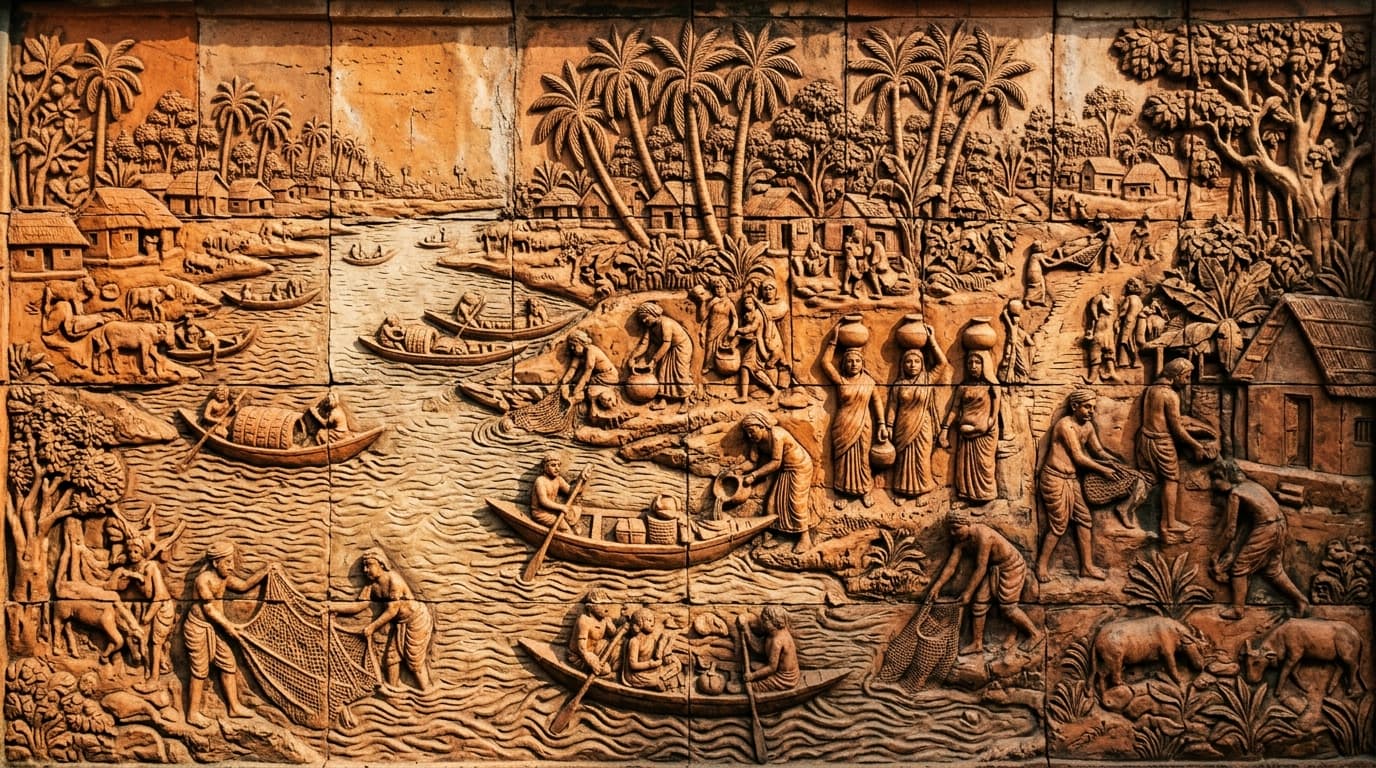
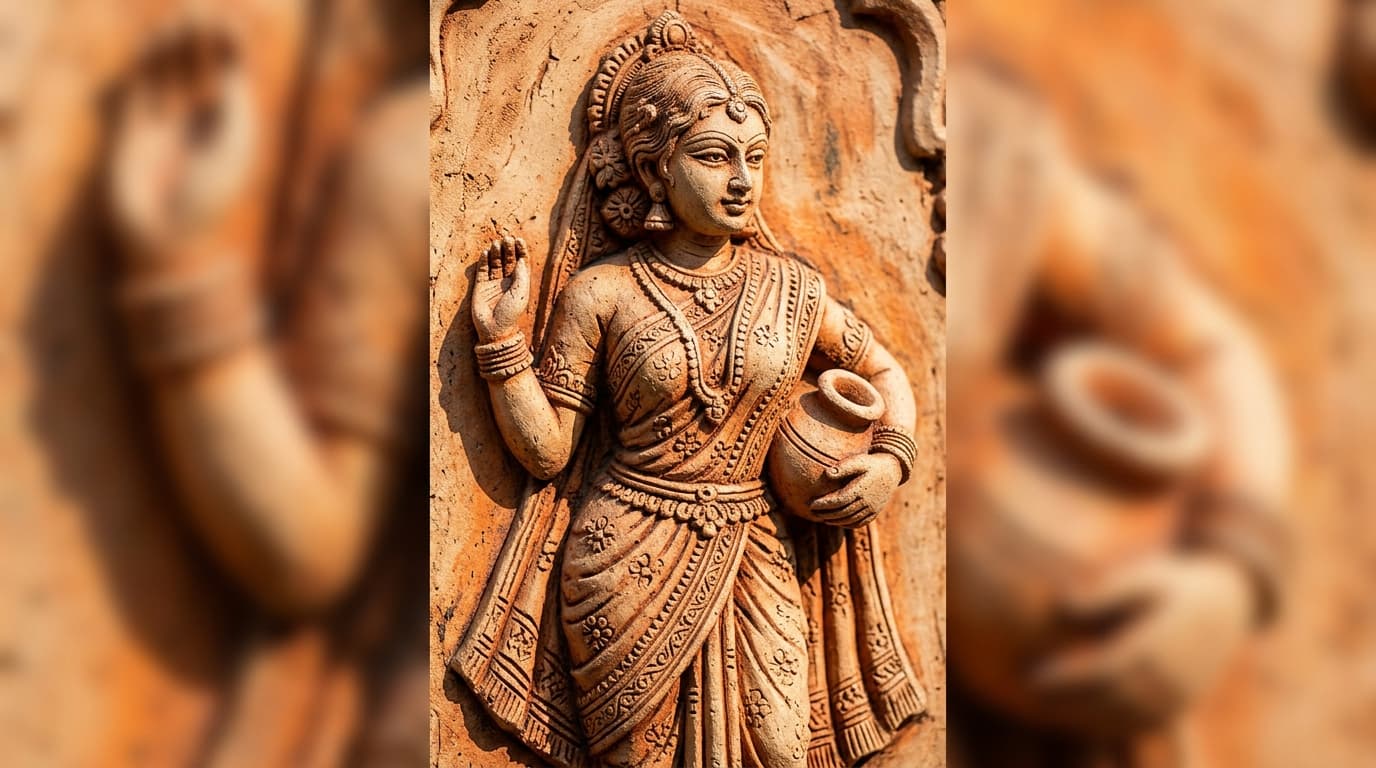
When most people think of terracotta, they imagine a uniform, flat, burnt-orange colour—the colour of a standard garden pot. But true, handmade Bengali terracotta is never just one colour. It is a living, breathing material that records the specific geology of its source and the atmospheric conditions of the day it was fired.
To a trained artisan, the colour of a fired panel tells a complete story of its creation.
The Geography of Clay
The fundamental colour of the clay is determined by where it is dug. In the Birbhum district, the soil is heavily lateritic, rich in iron oxide. When fired, it yields a deep, dramatic, almost purplish-red. Moving towards Bishnupur, the clay contains more silica and lighter minerals, resulting in a softer, wheat-like ochre that glows gently in the evening light.
Artisans often mix clays from different riverbanks, acting more like alchemists than potters, searching for the perfect structural integrity and color yield.
The Alchemy of the Kiln
The most dramatic colour variations, however, occur during the firing process in the traditional wood-fired kilns.
Unlike electric kilns that provide a uniform, sterile heat, a wood kiln is a chaotic environment. The flames lick the clay directly. Where the fire touches the panel, it might scorch it to a deep, charcoal black. Areas shielded from the direct heat might remain a pale pink. This process, known as 'flashing', creates a natural, mottled patina that makes every single tile completely unique.
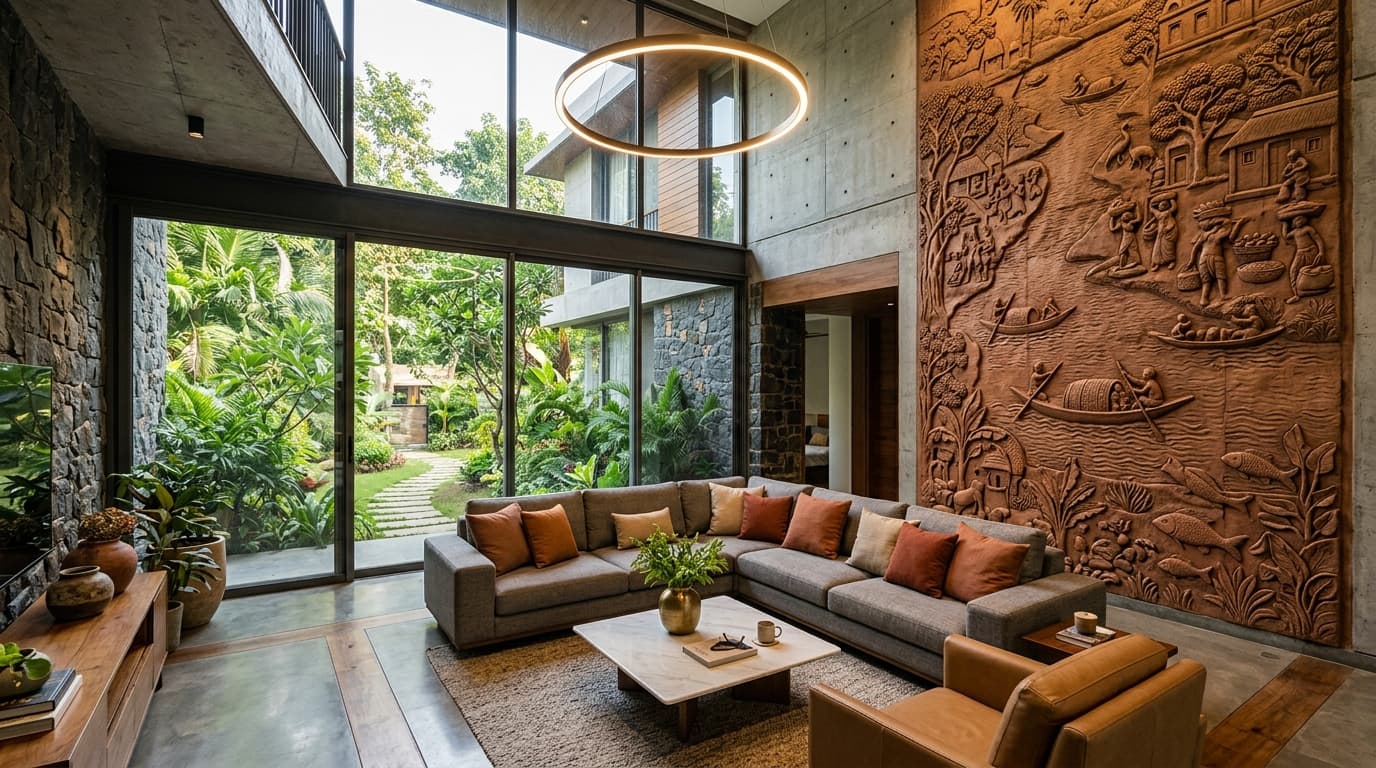
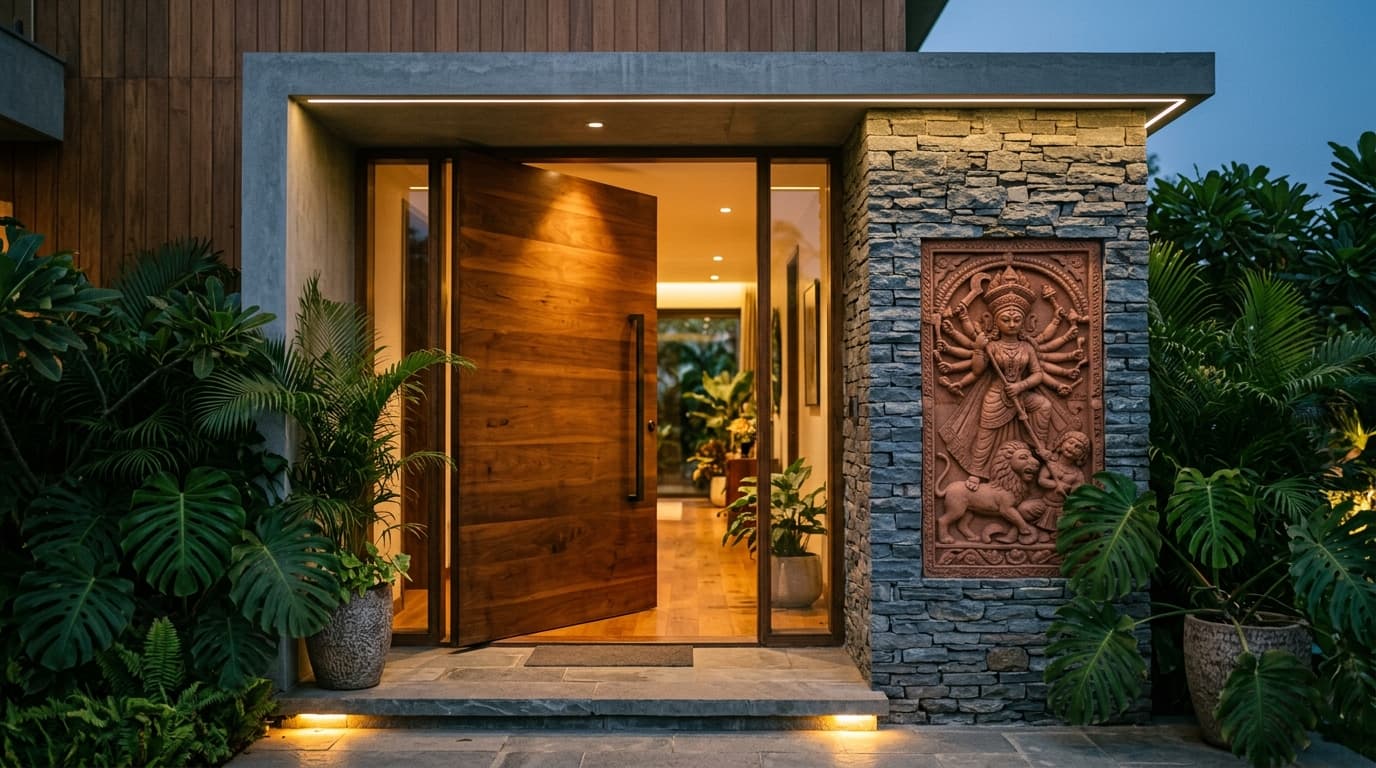
In our contemporary installations, we deliberately embrace these variations. We don't paint or glaze over the terracotta. We let the fire's signature remain, ensuring that the wall carries the true, unvarnished colour of Bengal.